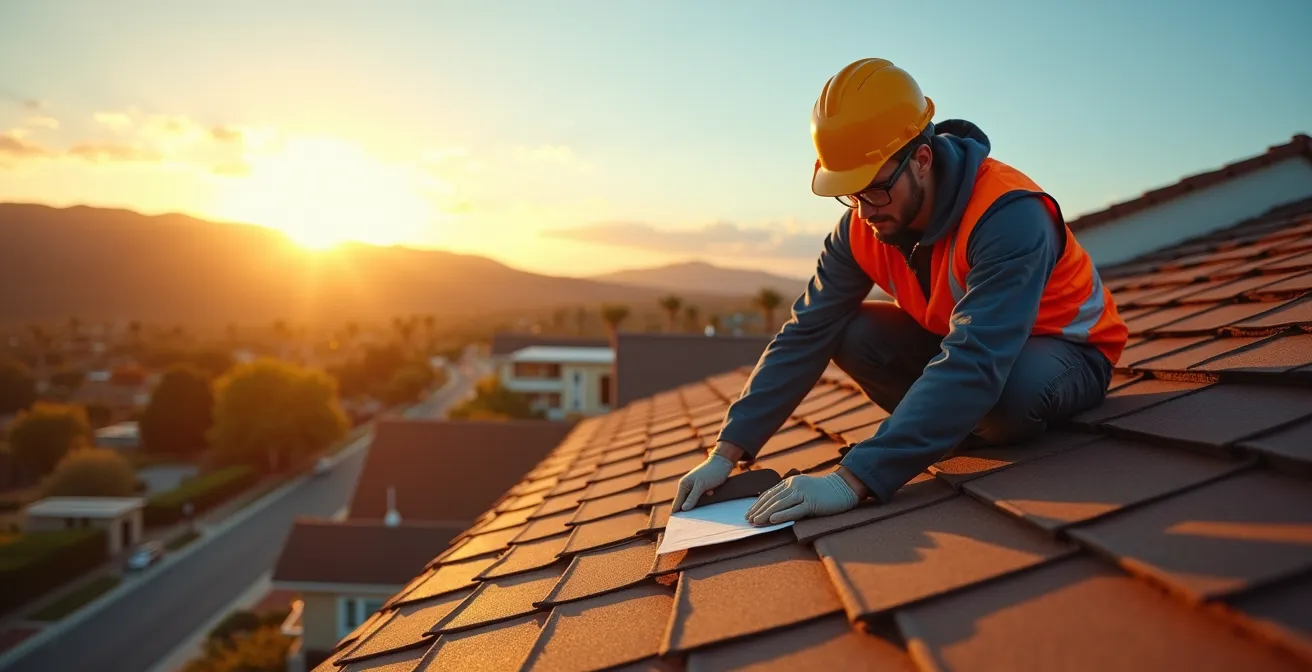
California homeowners face a roofing paradox: premium prices for materials that fail prematurely under the state’s extreme climate conditions. The industry operates on opacity, with multi-tier distribution systems that compound costs while manufacturers design durability tests that ignore California’s unique environmental stressors.
This systematic failure costs property owners thousands in premature replacements. When professional roofing contractors in California install materials rated for 30-year lifespans that deteriorate in 15, the financial impact extends beyond initial purchase prices. Understanding the mechanisms behind these failures transforms purchasing decisions from guesswork into strategic investment.
The path from industry exploitation to informed procurement requires exposing hidden economic structures, decoding certification validity, and implementing forensic supplier verification. This progression reveals how California’s roofing market operates, why conventional wisdom fails, and which actionable strategies protect your investment from systemic industry practices designed to maximize margins at your expense.
California Roofing Investment Protection in 5 Critical Steps
- Roofing material costs accumulate 40-60% markup through California’s three-tier distribution system before reaching your roof
- Standard ASTM durability tests fail to simulate California’s intense UV exposure, Santa Ana winds, and coastal corrosion patterns
- Third-party certifications from CRRC, ICC-ES, and independent labs predict real-world performance better than manufacturer claims
- Pricing anomalies below regional benchmarks often signal gray market sourcing, discontinued product lines, or B-grade material batches
- CSLB license verification, insurance validation, and physical project inspections create an audit trail that separates credible suppliers from fraudulent operators
The Hidden Markup System Californian Roofing Distributors Don’t Disclose
The roofing materials reaching California properties travel through a deliberately obscure distribution chain. Manufacturers rarely sell directly to contractors or homeowners. Instead, products pass through regional distributors, local retailers, and contractor networks, each layer adding margin that compounds invisibly into final pricing.
This three-tier model creates particular distortions in California’s market. 82.34% of the roofing market in 2024 consists of replacement projects rather than new construction, concentrating purchasing power among established distribution networks. These distributors leverage their position to maintain pricing opacity, preventing direct cost comparison between manufacturing and installation.
Regional monopolies further distort pricing structures. Northern California’s distribution networks operate independently from Southern California suppliers, creating geographic pricing variations that exceed legitimate transportation cost differences. A bundle of architectural shingles in the Bay Area carries markups 15-25% higher than identical products in San Diego, despite similar logistics requirements.
Labor often covers a significant portion of the total cost of a roof replacement, typically accounting for 60% of the expenses
– Bay Area Roofing Services, Forbes Home 2024 Analysis
Title 24 compliance requirements add another layer of hidden costs. California’s energy efficiency standards mandate specific thermal performance ratings, creating certification requirements that distributors exploit. The actual cost of Title 24 testing and certification represents a fraction of the premium charged, yet these compliance costs get absorbed into material pricing without itemization.
Contractor discount programs illustrate the markup system’s deceptive structure. When roofers advertise “special contractor pricing” or “preferred supplier rates,” they’re accessing wholesale tiers that still include 25-35% distributor margins above manufacturer costs. The discount exists relative to retail markup, not actual product value.
| Region | Cost Range per Sq Ft | Average Total Cost |
|---|---|---|
| Bay Area | $5.80 – $9.90 | $11,800 – $34,700 |
| Los Angeles | $6.00 – $12.00 | $6,000 – $12,000 |
| Orange County | $8.00 – $20.00 | $8,000 – $20,000 |
Understanding this markup architecture requires systematic price deconstruction. The itemization separates material costs from labor, delivery fees, disposal charges, and administrative overhead. Each category reveals where distributors embed additional margins beyond stated wholesale prices.
Identifying Hidden Markup Indicators
- Compare material costs across at least 3 different distributors to identify baseline pricing
- Request detailed breakdowns separating materials, labor, and ‘administrative fees’
- Calculate the per-square-foot cost including all hidden charges like delivery and disposal
- Cross-reference manufacturer MSRP with distributor pricing to identify markup percentage
Why California’s Climate Voids Most Manufacturer Durability Claims
Manufacturer warranty periods promise decades of performance, yet these guarantees rest on testing protocols that systematically exclude California’s harshest environmental conditions. Standard ASTM tests simulate controlled laboratory environments rather than real-world exposure to extreme UV radiation, thermal cycling, and wildfire ember attacks.
The gap between advertised lifespan and actual performance becomes most apparent in California’s diverse climate zones. Products rated for 30-50 year durability consistently fail between years 15-18 when installed in the Central Valley or high-desert regions, where UV intensity exceeds the testing parameters built into manufacturer specifications.
ASTM D3161 wind resistance testing illustrates this methodological failure. The standard simulates sustained winds and occasional gusts, but it doesn’t replicate Santa Ana wind patterns. These seasonal events generate extreme pressure differentials and directional shifts that stress roofing materials in ways laboratory tests never capture.
California’s roofing materials face environmental stressors that compound beyond simple addition. UV degradation accelerates in high-altitude and desert installations, breaking down asphalt shingle granules and compromising waterproofing integrity. Thermal cycling between 110°F summer days and 40°F winter nights creates expansion-contraction stress that laboratory aging tests compress into unrealistic timeframes.

The visible evidence of premature failure appears as granule loss, surface cracking, and brittle deterioration. These damage patterns emerge years before warranty coverage acknowledges material defects, leaving property owners financially responsible for replacements that shouldn’t be necessary according to manufacturer timelines.
Coastal installations face a different but equally destructive environmental challenge. Salt spray corrosion attacks metal roofing components, fasteners, and flashing systems. Manufacturer warranties typically exclude “environmental factors” in fine print, creating coverage gaps that void protection precisely when climate-specific damage occurs.
Wildfire exposure adds another dimension that standard testing ignores. Class A fire ratings measure direct flame resistance, but they don’t evaluate ember penetration resistance in Wildland-Urban Interface zones. Materials may pass fire tests while failing to prevent ignition from windblown embers during wildfire events, the actual threat mechanism California properties face.
The performance gap between theoretical durability and California reality requires homeowners to discount manufacturer claims by 30-40% when calculating replacement timelines. A product marketed with a 30-year warranty should be budgeted for 18-21 year actual service life under California conditions, fundamentally altering lifetime cost calculations.
Decoding Supplier Certifications That Actually Predict Quality
Industry certifications range from rigorous third-party validation to meaningless self-declarations. The difference determines whether a certification actually predicts performance or simply provides marketing material. California’s specific climate and building code requirements make certain certifications essential while rendering others irrelevant.
Cool Roof Rating Council certification carries particular weight for California installations. CRRC maintains a publicly accessible database where you can verify product thermal performance ratings specific to your climate zone. The rated products directory allows direct comparison of solar reflectance and thermal emittance values, metrics that directly impact Title 24 compliance and long-term energy costs.
ICC-ES evaluation reports provide another verification layer that separates legitimate products from those claiming generic code compliance. These reports document independent testing that validates manufacturer claims against specific building code requirements. Accessing these reports requires knowing the ESR number, which genuine manufacturers prominently display while inferior suppliers omit or obscure.
The distinction between third-party tested and manufacturer self-certified products reveals quality differences that impact long-term performance. Independent testing laboratories like UL, Intertek, and SGS operate without financial incentives to approve products, creating validation processes that manufacturers cannot manipulate. Test report numbers should be verifiable through the testing organization’s public database.

Professional inspection reveals the physical evidence of certification validity. Genuine certified products display permanent labeling with specific test report numbers, certification body logos, and manufacturing date codes. These markings allow field verification that the delivered materials match the certified specifications you researched before purchase.
California Fire Marshal listings become critical for properties in WUI zones, where wildfire risk elevates material requirements beyond standard building codes. The Office of the State Fire Marshal maintains searchable databases of approved products, cross-referenced by product type and certification level. Verifying these listings before purchase prevents costly replacement when building inspectors reject non-compliant materials.
Certification verification transforms from abstract research into practical purchasing criteria when you understand where to access authoritative databases. The CRRC website, ICC-ES report library, and OSFM product listings provide free public access to information that validates or exposes supplier claims, shifting negotiating power from distributors to informed buyers.
The forensic approach to certification review creates a documented trail of verification. Screenshot certification database entries, save PDF copies of evaluation reports, and maintain a file linking purchased materials to their certified specifications. This documentation becomes essential if performance failures emerge and warranty claims require proof that specified materials were actually delivered.
Red Flags in Supplier Pricing That Signal Inferior Product Sourcing
Price variance analysis reveals sourcing quality before materials reach your roof. When quotes deviate more than 15% below established regional benchmarks, the discount signals compromised sourcing rather than competitive pricing. Gray market materials, discontinued product lines, and B-grade manufacturing batches get liquidated through channels that undercut legitimate distribution.
Forced bundling tactics mask inferior primary products by inflating margins on accessories. Package deals that require purchasing specific underlayment, fasteners, or ventilation products alongside discounted shingles transfer profit from visible line items to components buyers research less thoroughly. The artificially low shingle price gets subsidized by overpriced accessories that carry higher margins.
Urgency-based pricing exploits decision-making psychology rather than reflecting genuine market conditions. Suppliers fabricate scarcity with expiring deals and limited inventory claims, pressuring buyers into rushed decisions that prevent proper certification verification and competitive bidding. Legitimate market fluctuations occur gradually through commodity pricing, not through flash sales on construction materials.
True per-square-foot cost calculation requires including waste factors, required accessories, and California-specific installation components that suppliers deliberately exclude from initial quotes. A product quoted at $3.50 per square foot becomes $4.80 after accounting for 15% waste factor, ridge cap materials, starter strips, and specialized fasteners mandated by local wind load requirements.
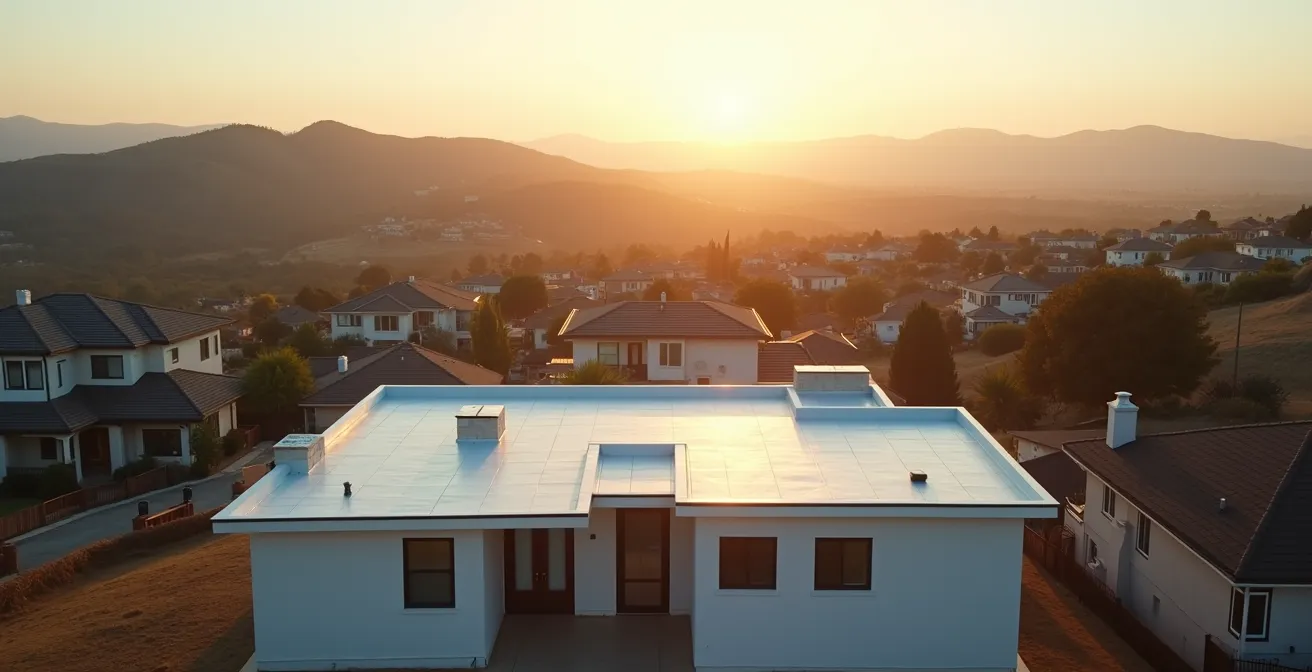
The completed installation reveals quality differences that pricing analysis predicted. Clean installation lines, consistent material appearance, and proper accessory integration demonstrate that adequate margins supported skilled labor and genuine materials, while cost-cutting becomes visible in shortcuts and inconsistent product quality.
Overstock specials deserve particular scrutiny when they involve roofing materials. Unlike consumer goods where overstock simply means excess inventory, roofing material surplus often indicates manufacturing defects, warranty expiration proximity, or formulation changes that made the batch obsolete. Suppliers liquidating these materials through deep discounts rarely disclose the underlying reasons for surplus inventory.
Regional pricing benchmarks provide context for evaluating whether quotes reflect competitive pricing or problematic sourcing. Understanding that Bay Area installations legitimately cost 20-30% more than Central Valley projects due to labor rates and permitting costs prevents mistaking appropriate regional variance for price manipulation, while also making genuine red flags more apparent against calibrated expectations.
Payment term demands signal supplier confidence in product quality and business stability. Suppliers requiring full payment before delivery or offering unsolicited discounts for cash payments often operate in gray markets where conventional business accountability doesn’t apply. For those seeking to evaluate supplier quality standards comprehensively, payment structure analysis provides insight into operational legitimacy that pricing alone cannot reveal.
Key Takeaways
- Distribution markups accumulate 40-60% between manufacturer and installation through California’s three-tier system
- ASTM testing protocols fail to simulate California UV intensity, Santa Ana winds, and coastal corrosion
- CRRC, ICC-ES, and independent lab certifications provide verifiable quality prediction through public databases
- Pricing anomalies exceeding 15% below benchmarks indicate gray market, discontinued, or defective material sourcing
- CSLB verification, insurance validation, and physical project inspection create supplier audit documentation
Building a Verified Supplier Audit Trail Before You Commit
Systematic supplier verification transforms subjective reputation assessment into documented credential validation. California’s Contractors State License Board maintains comprehensive databases tracking active licenses, bond coverage, and disciplinary actions. The CSLB website allows direct verification of license status, revealing whether a supplier maintains required credentials or operates under expired or suspended authorization.
License verification extends beyond confirming active status. The disciplinary history section documents formal complaints, enforcement actions, and resolution patterns that reveal how suppliers handle disputes. A contractor with multiple resolved complaints about material quality or installation defects demonstrates problematic patterns that marketing materials never disclose.
Insurance validation requires direct verification beyond accepting certificate copies. Calling listed insurance carriers to confirm active general liability and workers’ compensation coverage prevents scenarios where presented certificates reflect expired or cancelled policies. Verifying coverage limits ensures that the supplier maintains adequate protection for project scale rather than minimum legal requirements.
Reference validation methodology must move beyond curated testimonial lists to include physical project inspection. Visiting completed installations allows direct assessment of workmanship quality, material consistency, and detail execution. Interviewing property owners about post-installation performance and supplier responsiveness reveals information that written testimonials omit.
The inspection process targets specific quality indicators that predict long-term performance. Flashing installation quality, fastener placement consistency, and valley detail execution provide evidence of whether installers follow manufacturer specifications or cut corners that void warranties. These technical details become apparent through physical inspection while remaining invisible in project photos.
Creating a supplier scorecard quantifies subjective reputation into weighted criteria. Years in business, manufacturer-authorized dealer status, warranty claim responsiveness, and BBB complaint ratios become numeric inputs that enable objective comparison. California-specific criteria like Title 24 compliance experience and WUI zone installation history weight the evaluation toward relevant expertise.
The scoring matrix should prioritize factors that predict performance reliability over marketing polish. A supplier with 15 years of documented installations and occasional website updates demonstrates operational focus that often correlates with quality, while slick marketing with limited verifiable project history suggests investment in appearance over substance.
Manufacturer-authorized dealer status provides another verification layer. Major manufacturers maintain dealer locator tools that confirm authorized supplier status. Authorized dealers receive technical training, warranty processing support, and product quality guarantees that independent distributors cannot access, creating performance incentives that gray market suppliers lack.
Documentation assembly transforms scattered verification into organized evidence. Maintain a file containing CSLB verification screenshots, insurance carrier confirmation emails, reference project photos with location details, and manufacturer authorization verification. This audit trail supports informed decision-making and provides evidence if disputes emerge regarding supplier credentials or material specifications.
The verification process integrates naturally with planning strategies when approached systematically. Property owners can reference comprehensive home improvement planning tips that extend these forensic evaluation methods across renovation projects, creating consistent quality standards that protect investments beyond roofing alone.
Frequently Asked Questions on Roofing Materials
Why do some suppliers require bundling underlayment with shingles?
Forced bundling often masks inferior shingle quality by subsidizing low prices with high-margin accessories, making true cost comparison difficult.
How long do roofing materials actually last in California’s climate?
Products rated for 30-year lifespans typically fail between 15-18 years under California conditions due to UV intensity, thermal cycling, and environmental stressors that standard ASTM tests don’t simulate.
What certifications should I verify before purchasing roofing materials?
Prioritize CRRC thermal performance ratings, ICC-ES evaluation reports, third-party testing from UL or Intertek, and California Fire Marshal listings for WUI zones. Verify all certifications through official databases rather than accepting supplier claims.
How can I verify a roofing supplier’s license in California?
Access the CSLB website to check active license status, bond coverage, and disciplinary history. Verify insurance coverage by calling carriers directly, and validate manufacturer-authorized dealer status through manufacturer websites.